
A signature has to be creased before it is sewn, and the crease has to do two things at once. It has to be deep and defined enough that the section folds where it should and sits properly in the line. And it has to be gentle enough not to mark or weaken the sheet, because on lightweight and porous stock the damage shows and the signature has to open cleanly for sewing.
A metal score struggles to do both. Press it hard enough to define the fold and it bruises or breaks the sheet. Back it off to protect the stock and the crease is too shallow to hold the fold. One fixed profile, and neither setting is right for every signature that comes through.
This is what sits in its place:
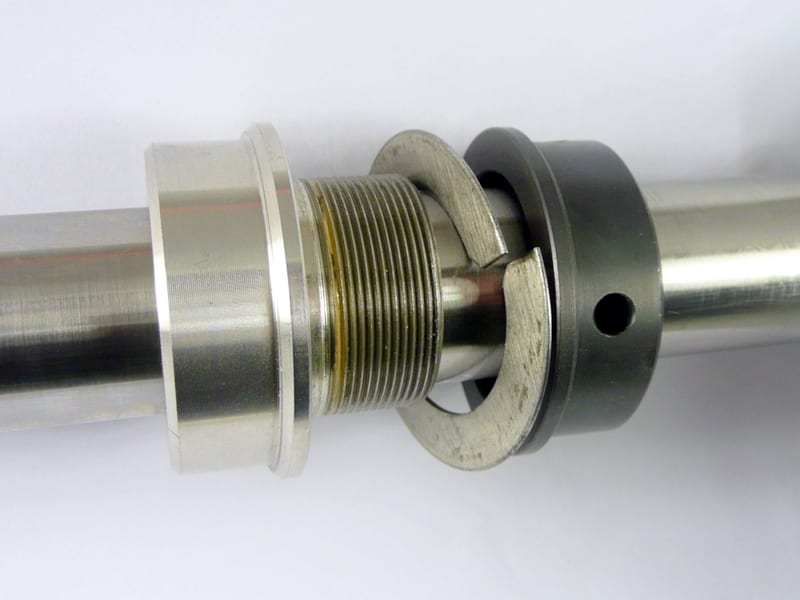 A metal score
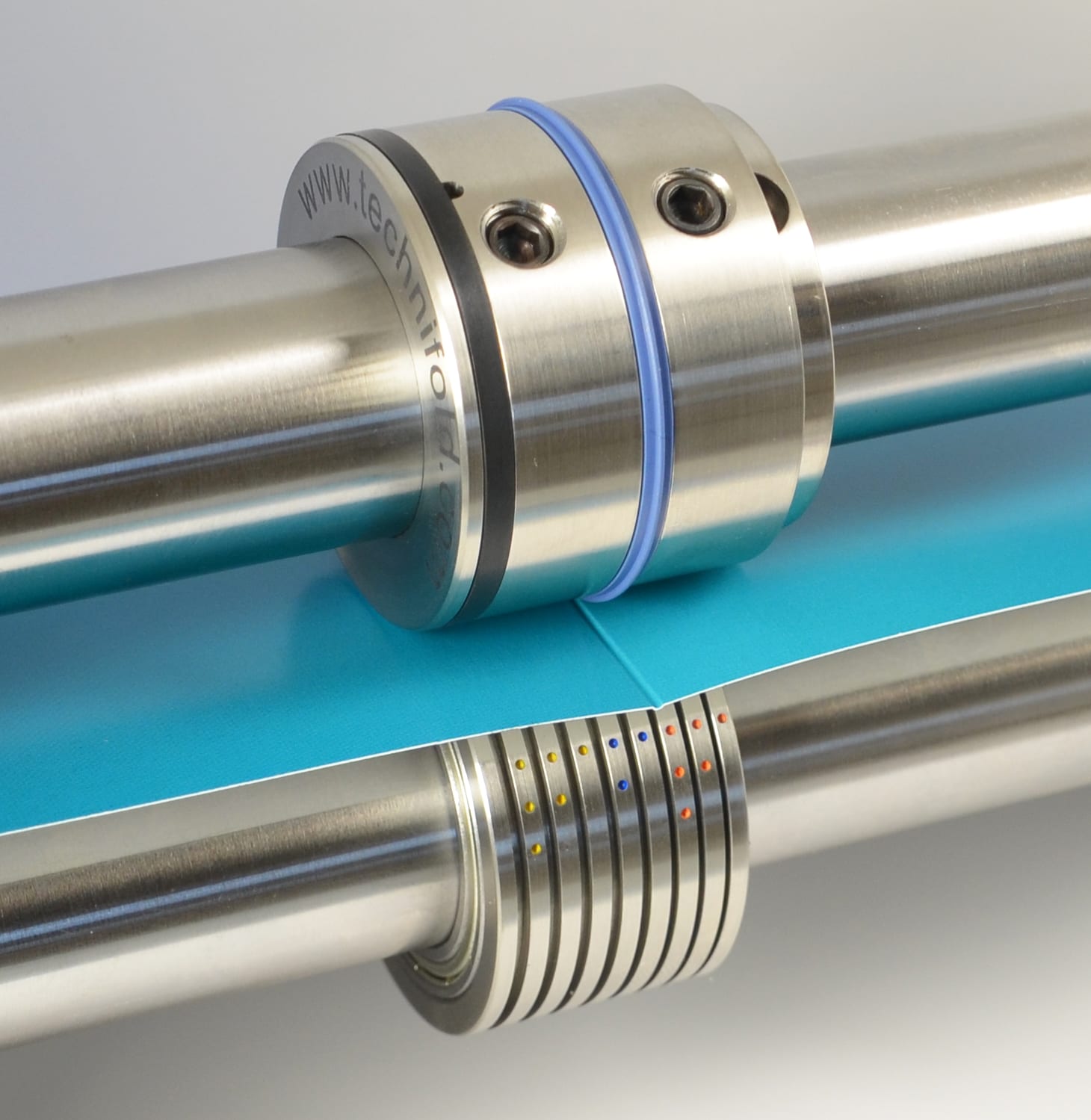 The Fast-Fit creasing unit
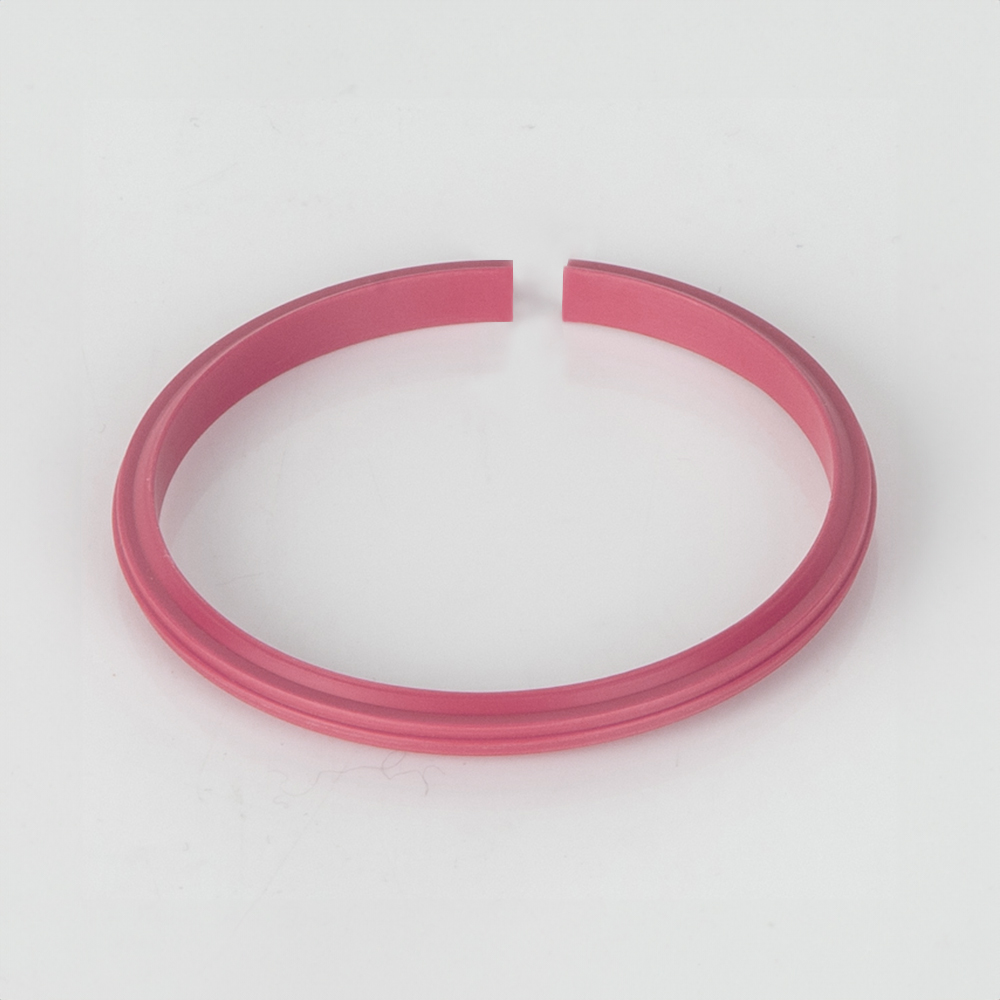
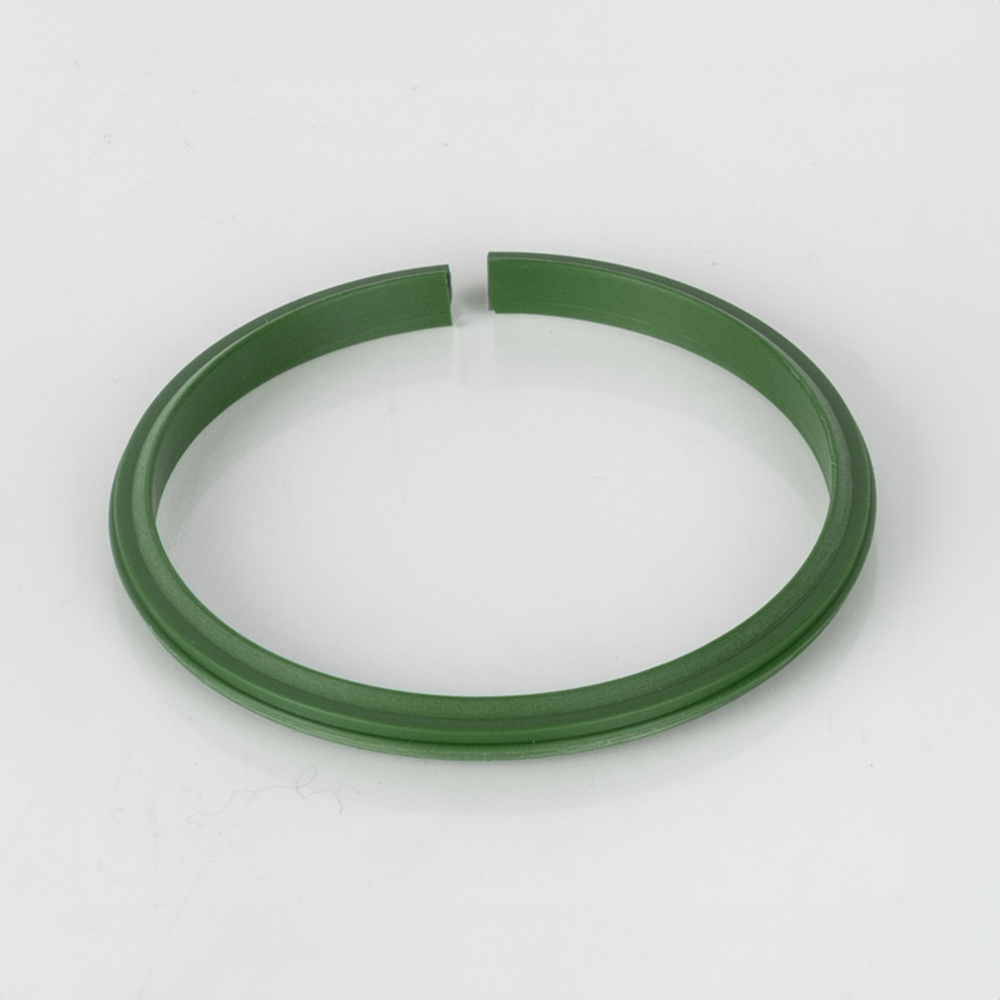
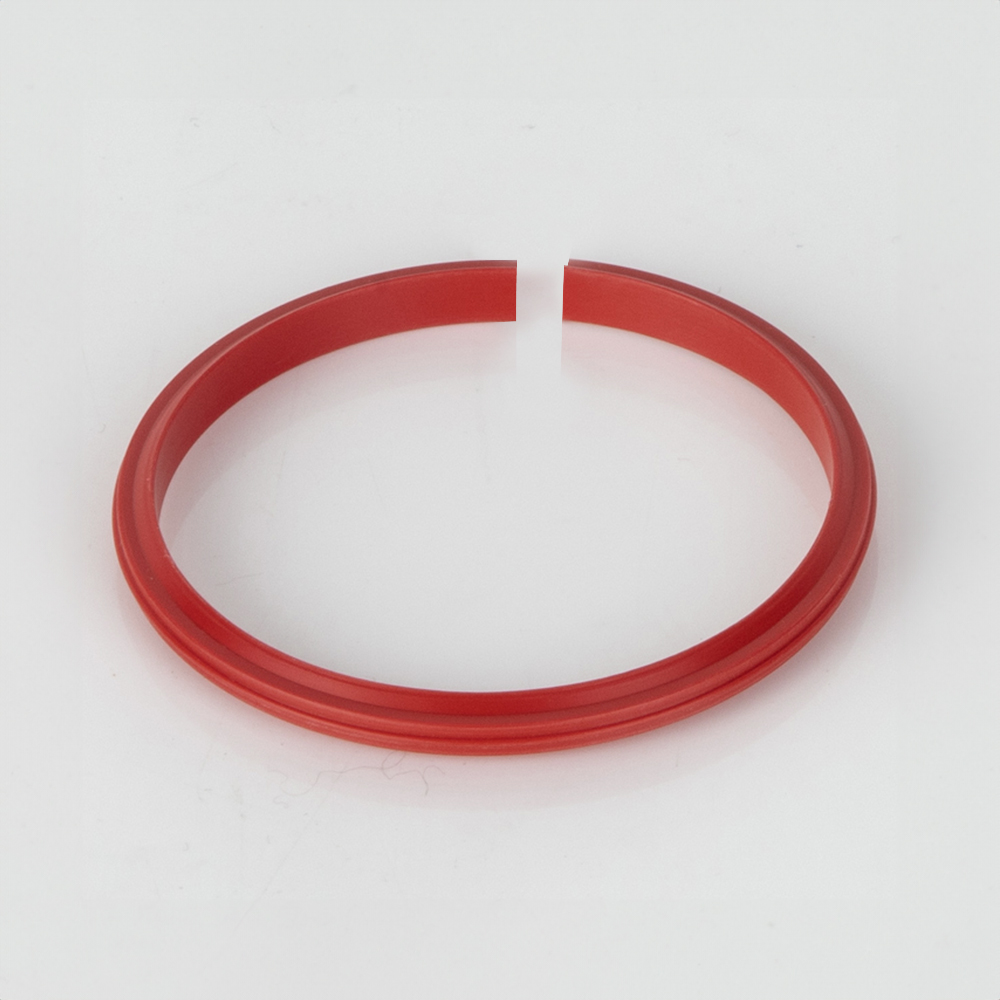
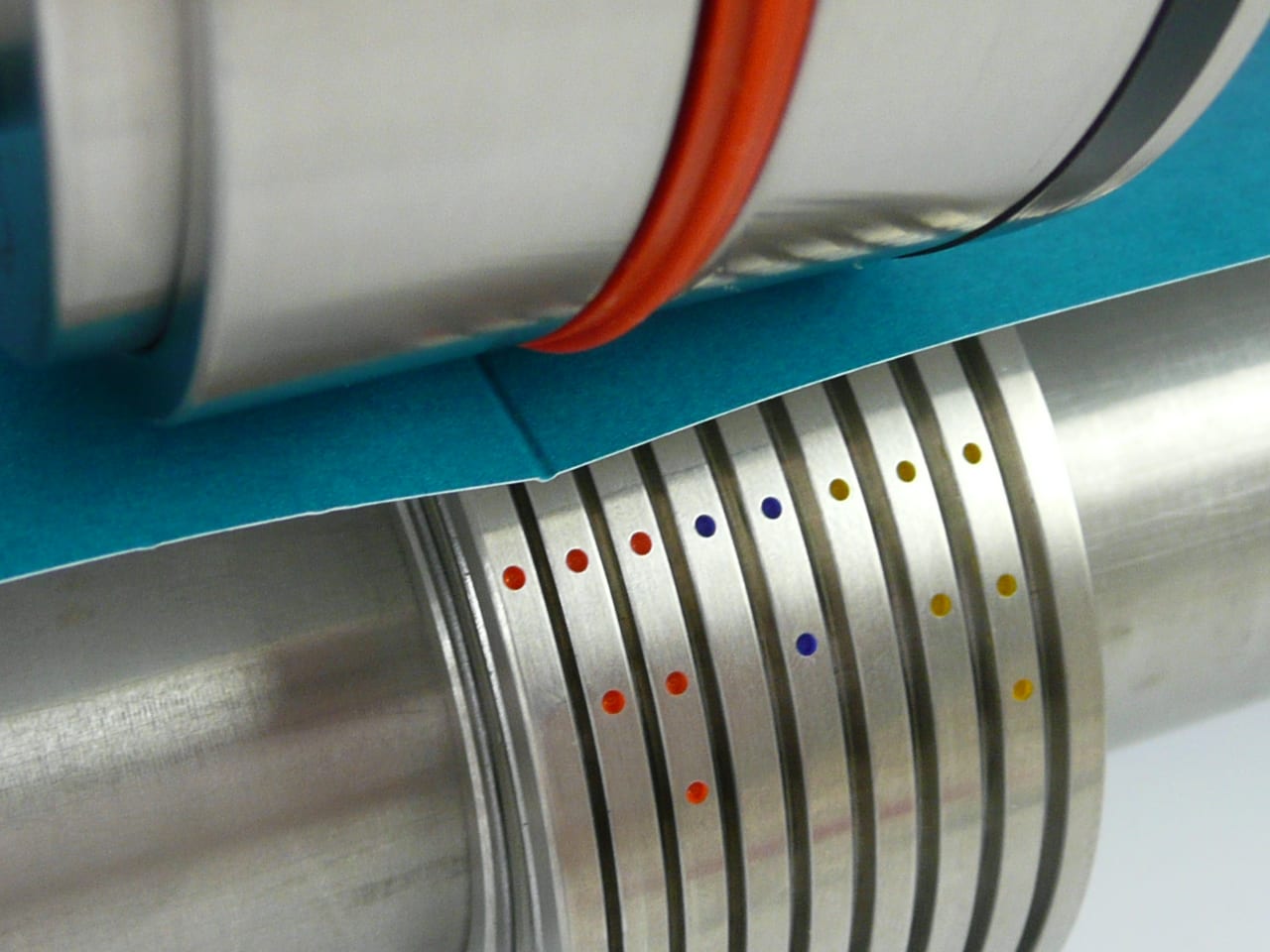
The creasing unit is three creasers, not one. Each carries a different colour rib, and the operator selects the one that suits the weight of the sheet being creased. So a light, porous signature and a heavy cover get the crease each actually needs, from the same unit, on the same machine.
Because the ribs are split, changing one takes moments and does not mean removing the creaser shafts. That matters on a sewing line, where the job changes and the machine is expected to keep running.
Three ribs, chosen by sheet weight
No payment details. No commitment.
The facts
- Creases
- Formed by a rubber rib against a matched channel, not scored
- Settings
- Three colour-coded ribs, selected by sheet weight
- Changeover
- Split ribs swap in moments, no shaft removal
- Fits
- Built per machine: Smyth and Meccanotecnica shafts differ in outside diameter, so each takes its own tool
- Proven
- 45,000+ tools running in 79 countries, since 1999