
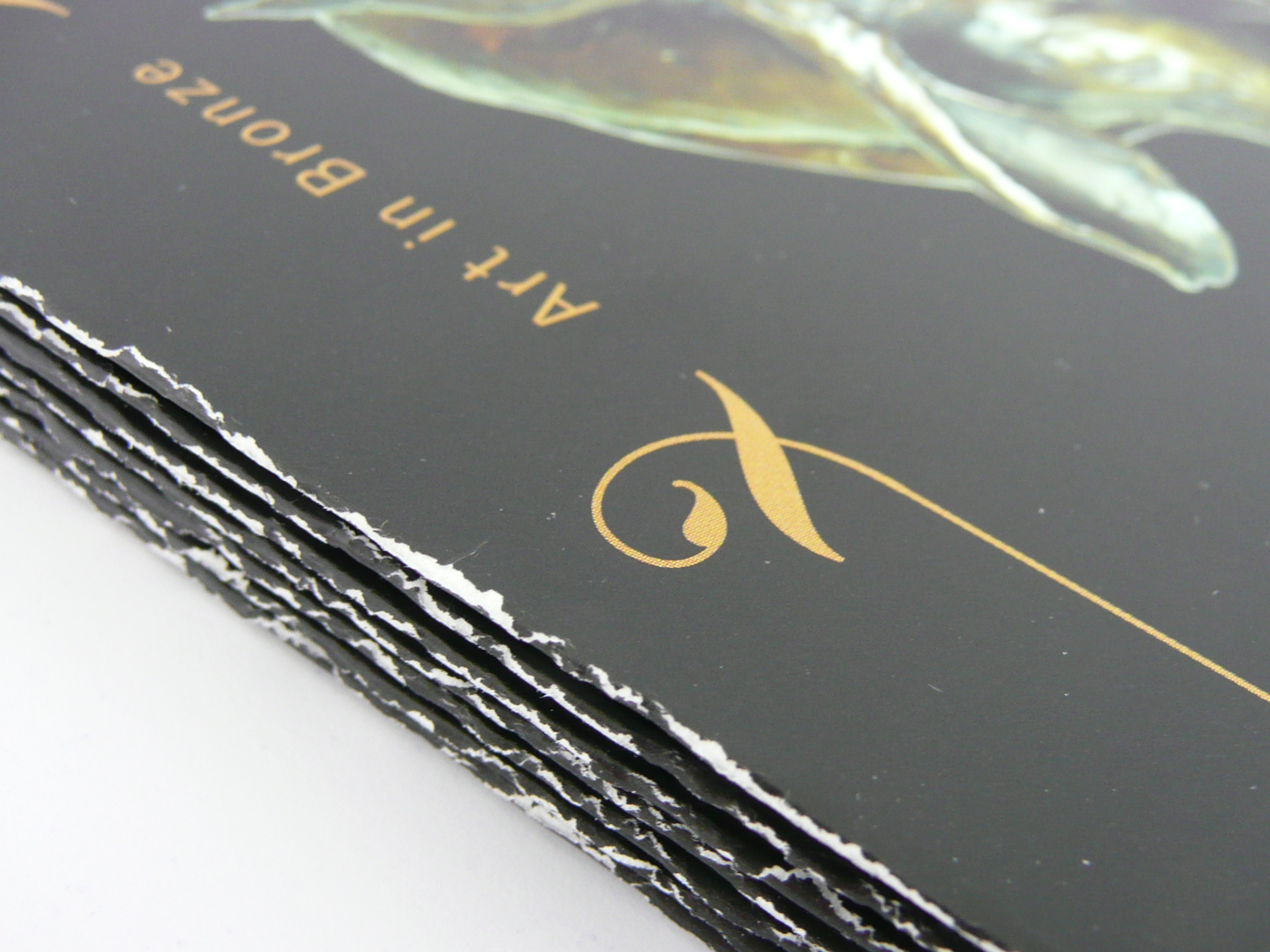
 Before
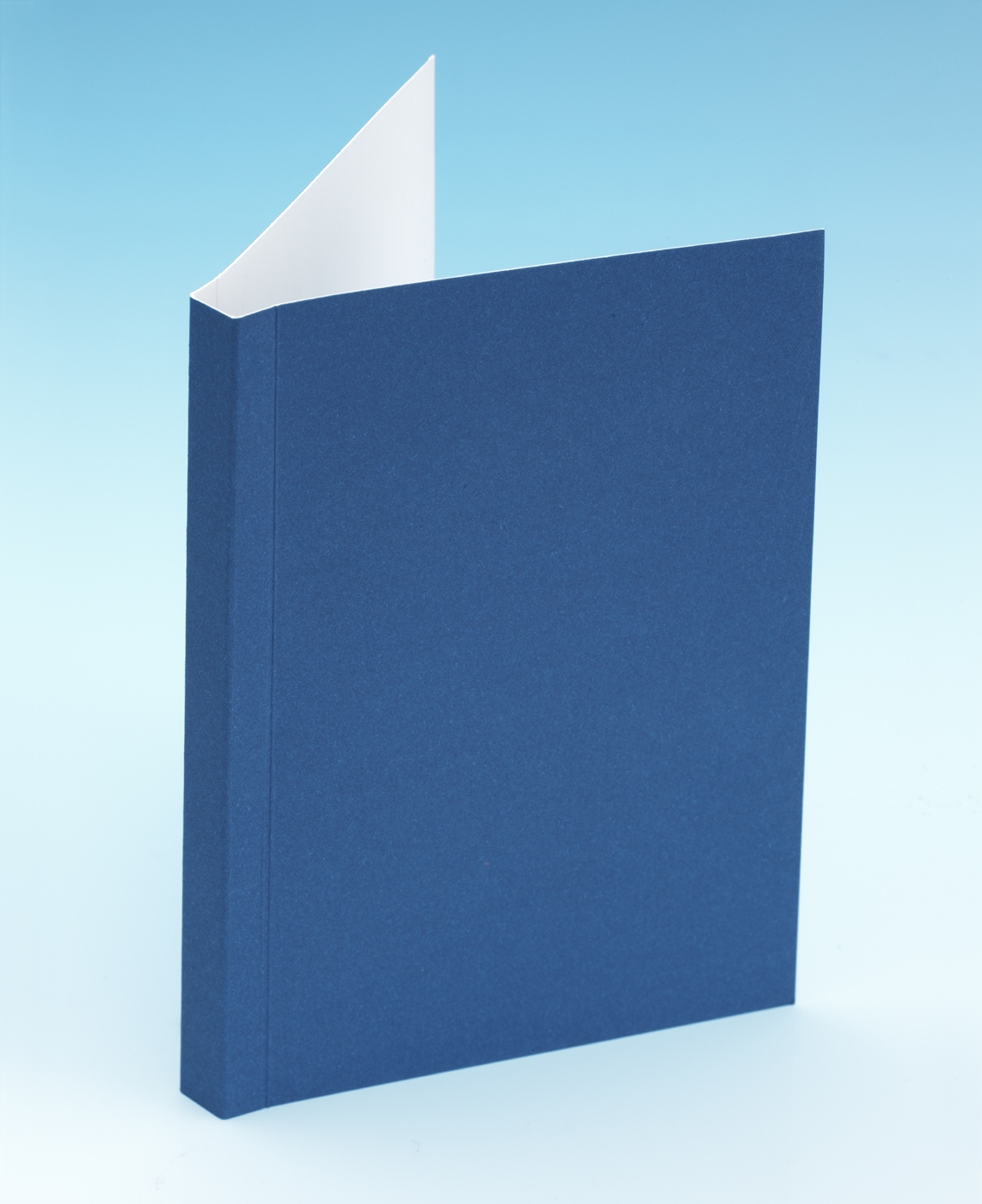 After
AfterFibre cracking on a perfect-bound book shows exactly where the eye goes first: white broken lines along the spine folds and the hinges, straight through the printed colour. Solid coverage, digital print and coated stocks crack worst, and no amount of nursing the nipper fixes it.
The damage happens at one spot in the machine: the cover scoring station, where the cover is scored in the feeder just before it meets the glued block. The steel collars fitted there scratch shallow lines into the printed face, cutting the fibres they should be stretching. The fold then breaks along the damage, and the crack is on the shelf for the life of the book.
This is where it happens, and what replaces it:
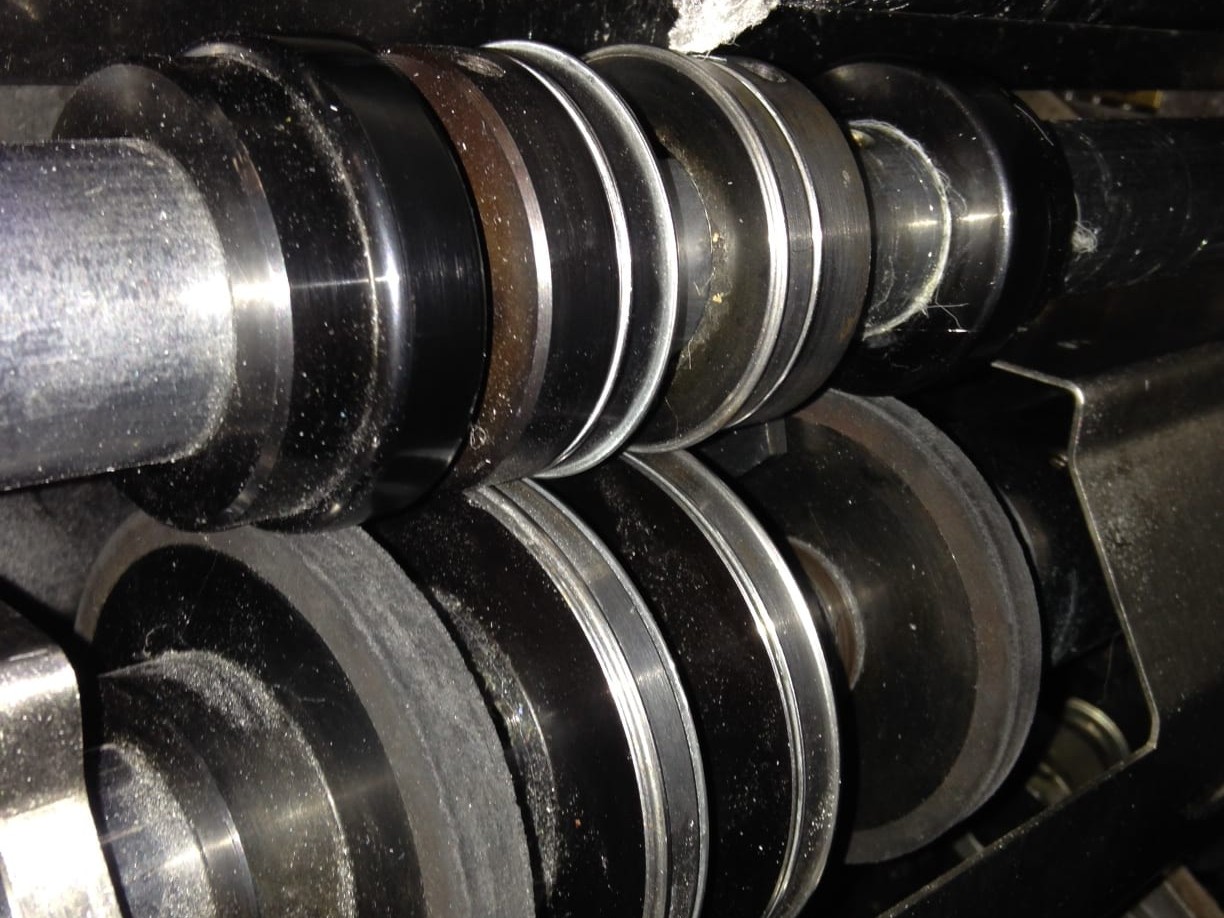 Your binder's metal scores
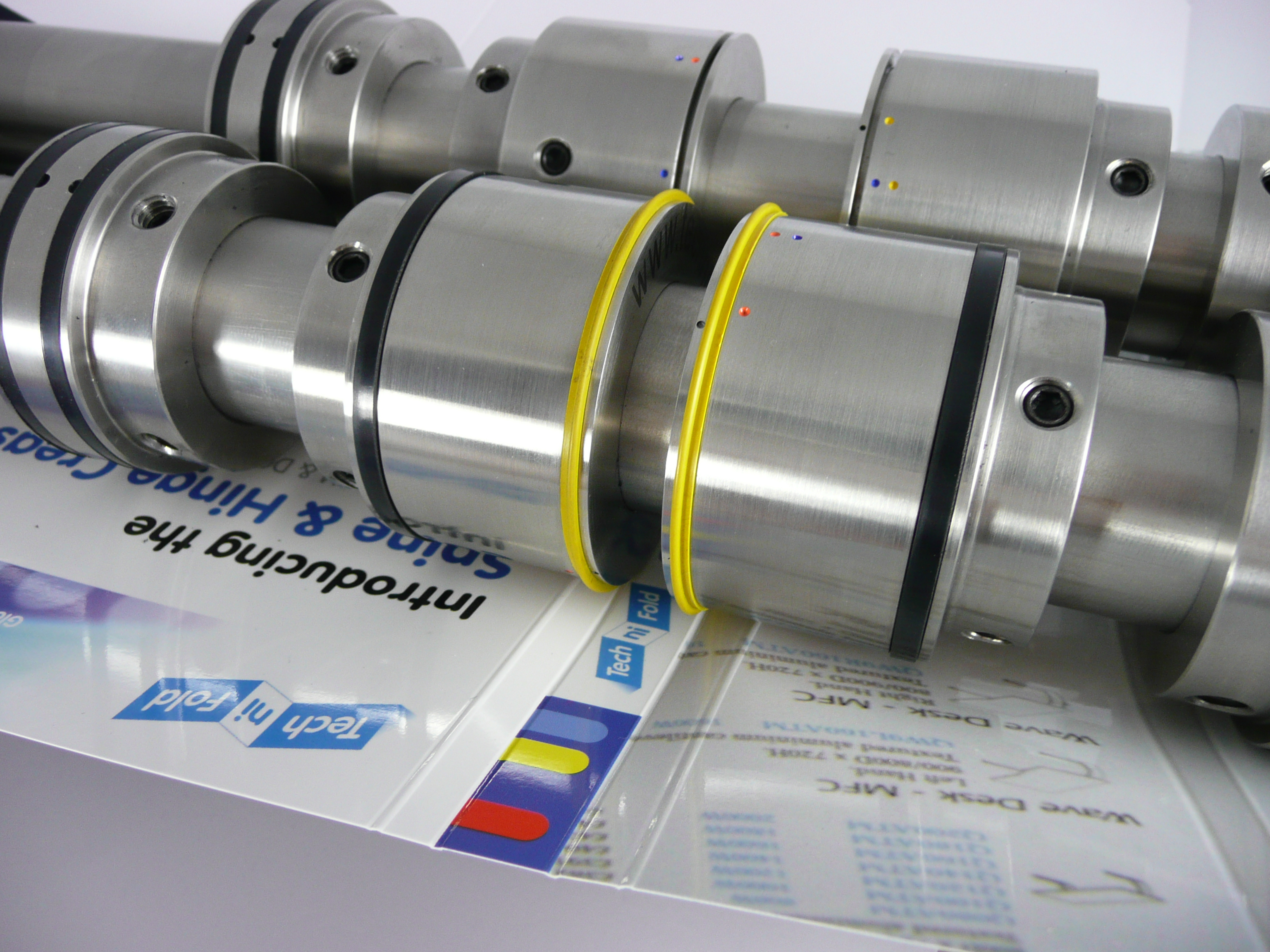 The Quad-Creaser
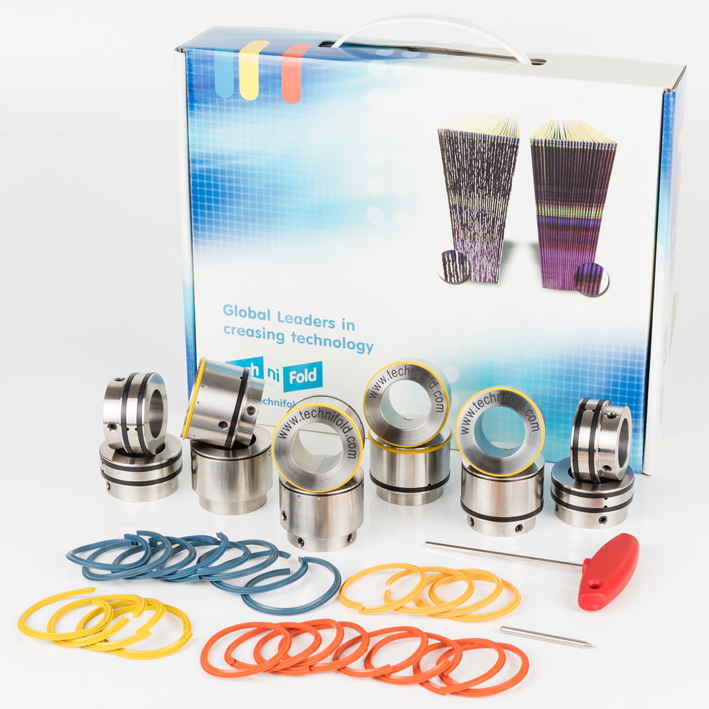
The Quad-Creaser mounts on the cover scoring shafts your binder already has and presses all four creases in one pass. The two spine creases adjust to the book's thickness, job to job. The two hinge creases sit exactly where the cover opens, so the fold happens on a pressed crease and nowhere else.
The creases are pressed by rubber ribs, not scratched by steel. The fibres stretch instead of tearing, the colour stays solid along every fold, and the binder stops being the place where good covers go to crack.
No payment details. No commitment.
“Best invention I've come across over the last decade — saved me a lot of time and money. Now I do not dread covers coming in, laminated or not.”
The facts
- Creases
- Four in one pass: two spine, two hinge
- Spine
- Width adjusts to the book's thickness, job to job
- Hinges
- Fixed or adjustable distance, 2.5mm to over 10mm
- Ribs
- Rubber, colour-coded light, medium and heavy
- Fits
- Your binder's cover scoring shafts, no modification
- Proven
- 45,000+ tools running in 79 countries, since 1999
Built for the binders you already run








And every perfect binder with standard cover scoring shafts. If yours is not listed, ask, the answer is usually yes.