
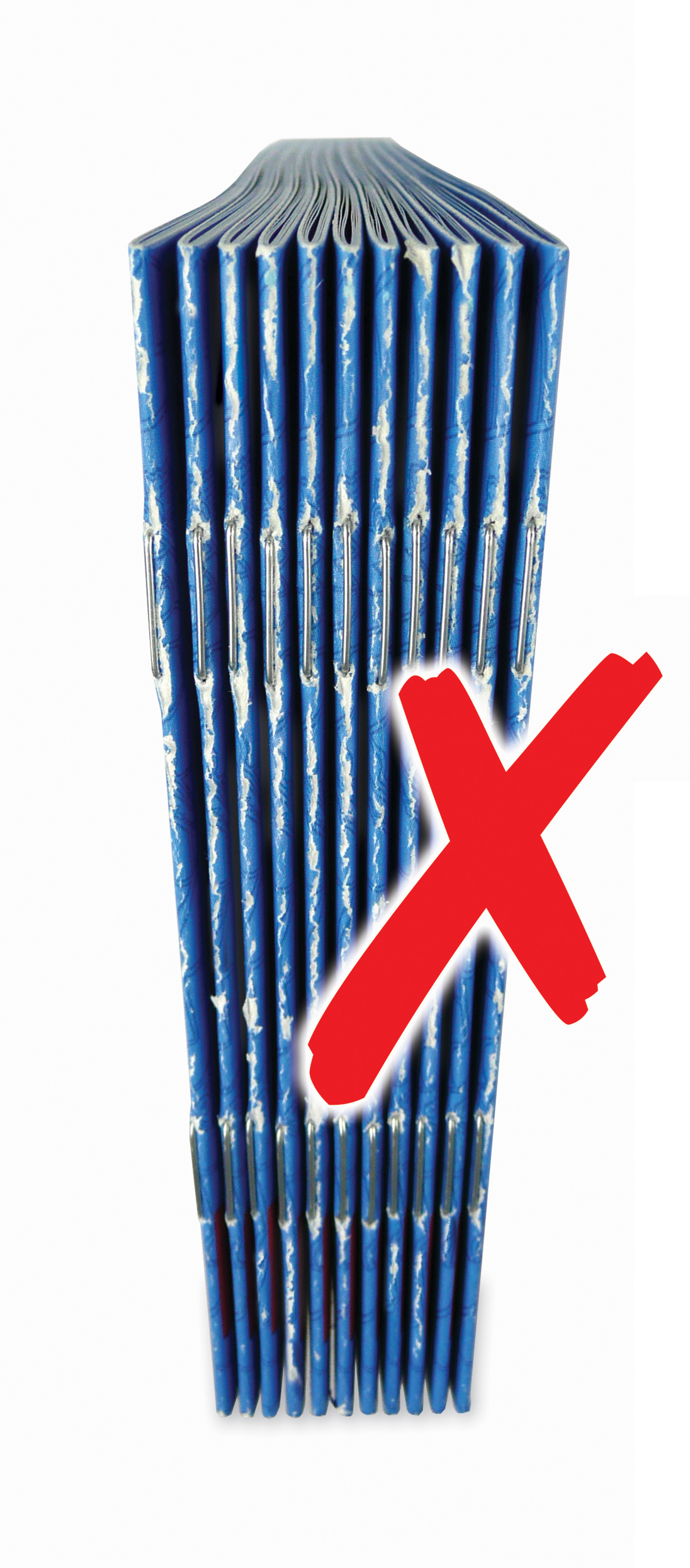
 Before
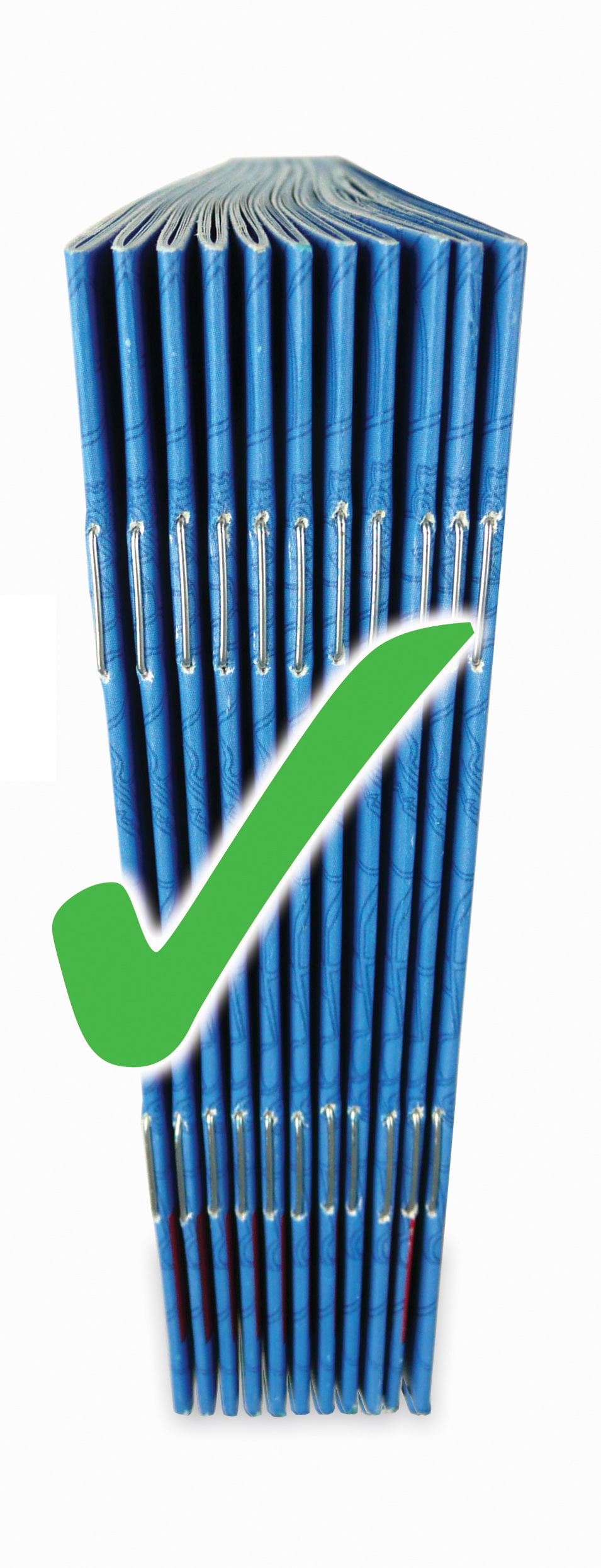 After
AfterOn stitched work, the spine is the product. Magazines, brochures and booklets get judged on that one fold, and it is the first thing a customer picks at: white cracked lines along the staples, straight through solid colour, coated stock and digital print.
The cause sits at one point in your machine. As the cover travels through, it passes over a single metal score in a set position, one steel profile crushing a line into the sheet on its way to the fold. It cuts the fibres it should be stretching, and the fold breaks along the damage, copy after copy.
This is the score doing the damage, and what replaces it:
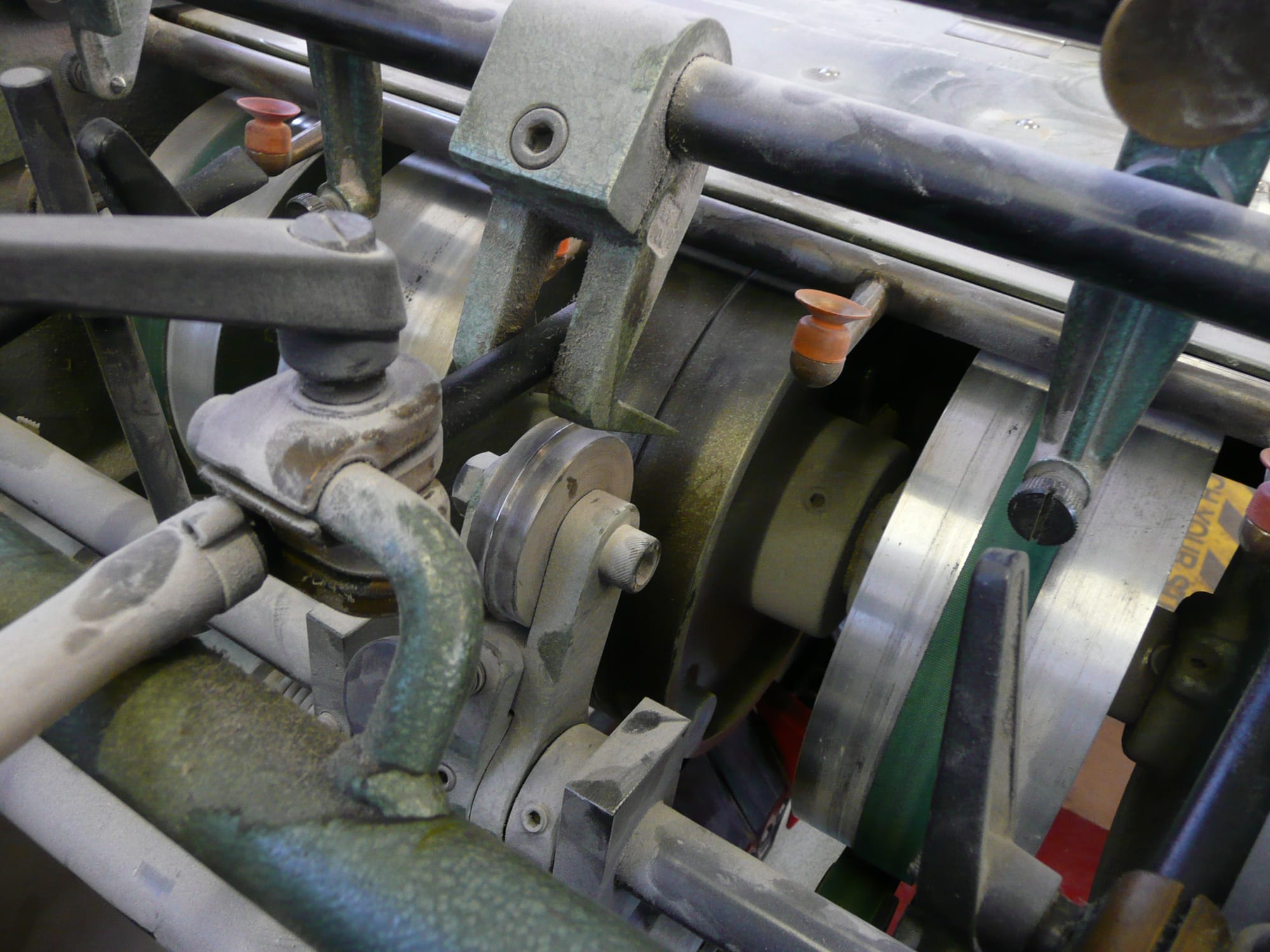 Your machine's metal score
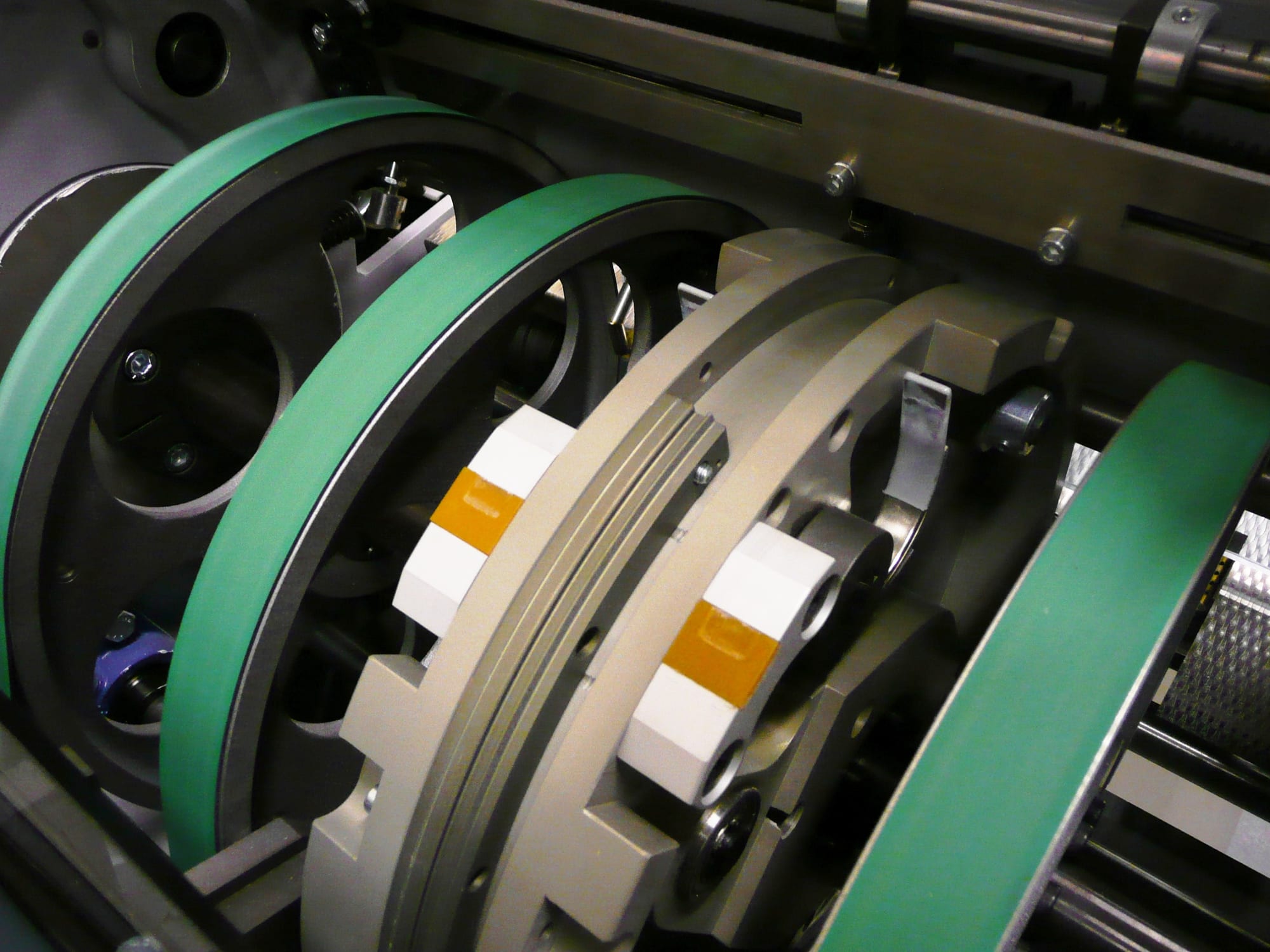 The Spine-Creaser, in its place
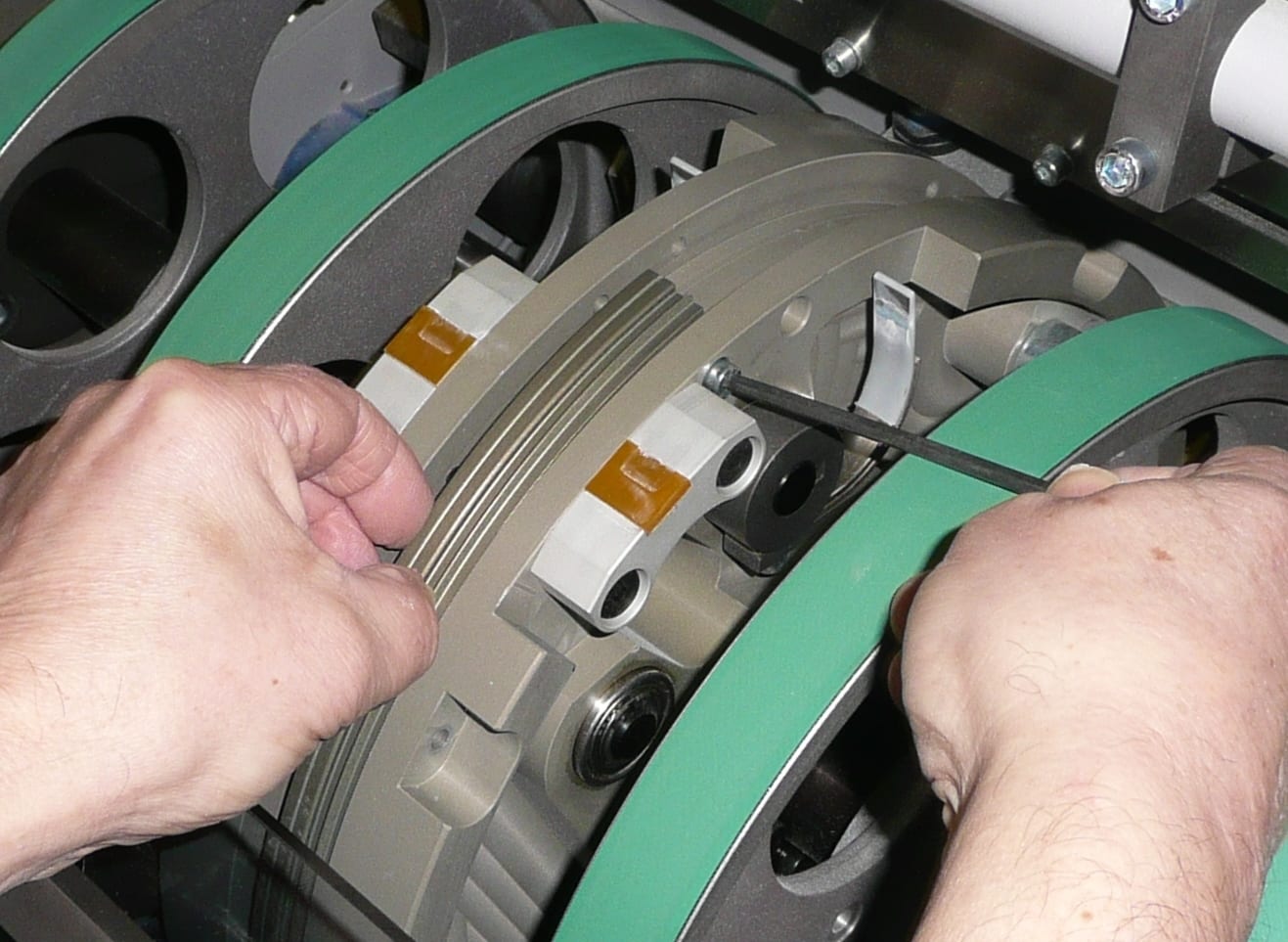
The Spine-Creaser takes the metal score's place and puts a pressed, cylinder-quality crease exactly on the fold line, inline, at full machine speed. Depending on your machine it uses a rubber creasing matrix that wraps the drum, or a creasing band running against a channel, both the same patented principle that has eliminated fibre cracking on folding machines for twenty-five years.
Spine-Creasers are built per machine, for stitchers, saddle-stitchers and cover feeders alike, and installation typically takes under thirty minutes. The spine comes off the machine clean on copy one and copy one hundred thousand, and the fold your customer judges the job by stops being the fold you apologise for.
No payment details. No commitment.
“Here at Bluestar, we use the Tech-ni-Fold systems on all of our machines including our Muller martini, which has the Spine Creaser integrated into our cover feeder. The face of print finishing has changed beyond all recognition, no more so than in the area of inline creasing & perforating. Gone are the days of having to do two processes, now it’s all inline – one process.”
The facts
- Crease
- One pressed crease, exactly on the fold line, inline
- Machines
- Stitchers, saddle-stitchers and cover feeders, built per machine
- Mechanism
- Rubber matrix on the drum, or band and channel, per your machine
- Install
- Typically under 30 minutes
- Proven
- 45,000+ tools running in 79 countries, since 1999
Built for the stitchers you already run






And every stitcher or cover feeder with a metal score station. If yours is not listed, ask, the answer is usually yes.